Power, by its very nature, is intoxicating. It commands respect, opens doors, and grants access to opportunities most can only imagine. But behind the prestige of leadership and fame, there lies a vulnerable truth—those in high places are often the ones most at risk of hard, hidden falls. Addiction doesn’t spare the powerful. In fact, the conditions that come with influence often feed it.
The world rarely sees this side of success. We see the accolades, the curated confidence, and the polished public image. But for many in positions of power—CEOs, celebrities, politicians, and influencers—addiction festers quietly beneath the surface, fueled by stress, isolation, and an overwhelming pressure to maintain perfection.
Power Creates Pressure
With power comes responsibility, and often, unrealistic expectations. Leaders are expected to be decisive, resilient, and always in control. Public figures are expected to be flawless, inspirational, and immune to failure. This nonstop pressure to perform can be mentally and emotionally exhausting.
In response, many turn to substances as a way to cope. Stimulants to keep going. Alcohol to wind down. Prescription medications to calm nerves or escape insomnia. At first, these habits may seem manageable—even necessary. But over time, they can evolve into dangerous dependencies.
The Illusion of Control
One of the most deceptive aspects of power is the illusion of control. High-profile individuals are used to managing people, projects, and public perception. That same sense of control often extends to their substance use. They believe they can handle it—until they can’t.
Addiction thrives on denial and secrecy, both of which are common in high-powered circles. Admitting to a problem can feel like admitting weakness, something many in leadership positions are conditioned to avoid. By the time the truth surfaces, the damage—personal, professional, and physical—may already be severe.
Isolation at the Top
The higher someone climbs, the lonelier the view can become. Genuine relationships become harder to maintain when people around you have motives or expectations. Many powerful individuals struggle with trust and feel they can’t confide in anyone without risking their reputation.
This emotional isolation creates fertile ground for addiction. Substances become a substitute for connection, offering a false sense of comfort and control in a world that often feels cold and transactional.
The Role of Enablers
In high-profile environments, enablers are common. Whether it’s a personal assistant, agent, colleague, or friend, many will look the other way—or even help maintain the illusion—because they benefit from the person’s continued success. This lack of honest accountability allows addiction to deepen, unchecked.
Finding Redemption Beyond the Fall
Despite the darkness, there is hope. Recovery is possible, even for those who feel they’ve fallen from great heights. In recent years, more powerful figures have come forward with their stories of addiction and healing, proving that vulnerability is not the opposite of strength—it is its foundation.
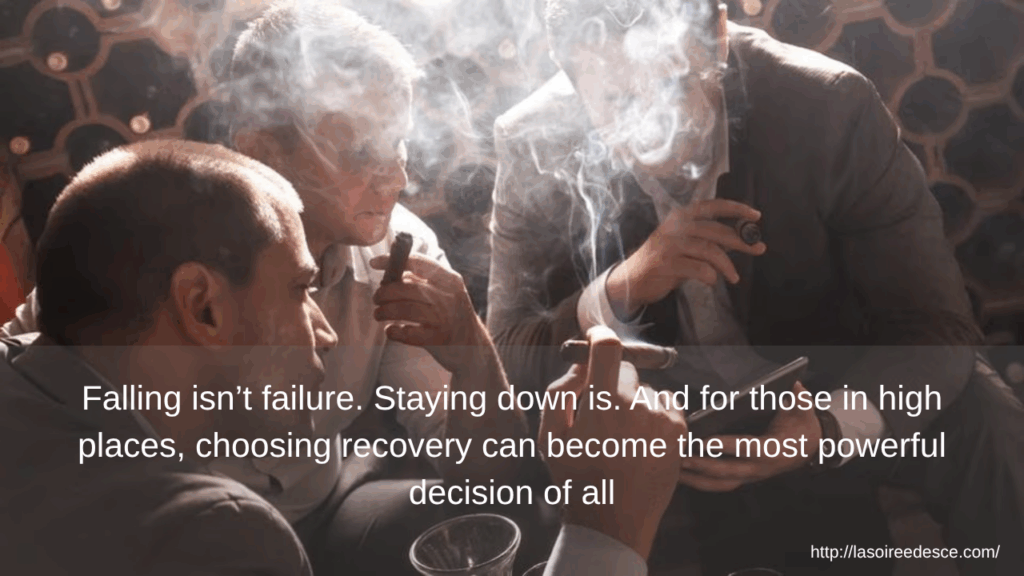
Falling isn’t failure. Staying down is. And for those in high places, choosing recovery can become the most powerful decision of all.